Category: Uncategorized

  • The Profession with Endless Opportunities

    The Profession with Endless Opportunities

    It’s no coincidence that on the first day of National Nurse Practitioner Week, I ended up having coffee with one of my old grad school NP buddies. He just moved back to California after spending almost 15 years in the Philippines, where he completed his medical degree among various other adventures. “There are so many opportunities for Nurse Practitioners in the United States,” he said as we discussed his new job as an NP at a Men’s health clinic.

    The evolution of the Nurse Practitioner role

    “If Dr. Ross, from the television show ‘ER’ and Nurse Jackie, from the show ‘Nurse Jackie’ had a baby it would be a Nurse Practitioner.” That’s what I would tell people when they asked me what an NP was. I frequently used the opening line when I gave lectures to high school students regarding the NP role.

    A Nurse Practitioner is a nurse who has a master’s degree and has completed a graduate level of education at a university. All NPs are registered nurses who are licensed by the Board of Registered Nursing in the state where they may be practicing. NP’s have an expanded scope of practice over the traditional registered nurse role and may vary from state to state.

    Loretta Ford and Dr. Henry Silver created the NP role in the 1960’s in Colorado due to a need to increase access to pediatric patient care. Dr. Ford believes that NP’s providing primary care of high quality can solve the access to patient care issues in America.

    Dr. Ford and her colleagues  initially started as public health nurses setting up clinics at various community centers, schools, and churches in Boulder Colorado. Like a true innovator Dr. ford noticed that only her colleagues and herself were taking care of public health issues in the underprivileged community setting. She realized that nurses needed to have expanded roles and specialized training to make basic decisions on their own.

    Full practice authority

    According to the American Academy of Nurse Practitioners, there are 22 states and the District of Colombia where NP’s are permitted full practice authority. Full practice authority permits NP’s to evaluate patients; diagnose, order and interpret diagnostic tests; and initiate and manage treatments, including prescribing medications and controlled substances indecently. The National Academy of Medicine and the National Council of State Boards of Nursing recommend this model.

    NP’s do more than just prescribe medications and diagnose health issues

    If you’ve ever had the opportunity to see a nurse practitioner, you’ve probably figured out they are amazing educators. That’s my favorite part of being a nurse practitioner, teaching. Straight from Dr. Loretta Ford’s mouth, teaching patients and to ultimately empower them to advance to self-care is the goal of the NP.

    Types of NP’s

    Pediatric Nurse Practitioner

    Neonatal Nurse Practitioner

    Family Nurse Practitioner

    Adult Gerontology Nurse Practitioner

    Psychiatric Mental Health Nurse Practitioner

    Women’s Health Nurse Practitioner

    Subspecialties

    Many NP’s choose to pursue a subspecialty and acquire training outside of traditional nurse practitioner programs. These may include:

    Emergency NP

    Cardiology NP

    Dermatology NP

    Orthopedic NP

    Aesthetic NP

    Nurse Practitioners as business owners

    Many nurse practitioners have found their niche and started their own businesses. Much like Dr. Loretta Ford, NP’s who have started their own businesses where they noticed there was a problem, and they came up with the solution. In many states, NP’s can open their own clinical practices.

    Are you a Nurse Practitioner searching for a fresh start?

    Have you thought about quitting your job or selling your house to move to a rural town? Or are you wanting to do the opposite and seek new adventures in a big city?

    It sounds like a scene right out of the Netflix binge worthy show ‘Virgin River.’ Why not make it a reality and work locum tenens? You too can have a ‘fresh start,’ and work in a new town. You never know who you’re going to meet in places like North Carolina, Georgia, California, New York, Texas, Louisiana, Montana, or Tennessee. Some of these assignments offer incredible perks like housing, loan repayment and special bonuses.

     Medcare staffing places physicians, advanced practitioners, pharmacists and dentist in locum tenens, contract positions and permanent jobs. Contact us now by filling out this form or by calling 888-474-3380. Click here to view assignments.
  • 15 Essential Selfcare Hacks to Combat Workplace Burnout for All Healthcare Providers

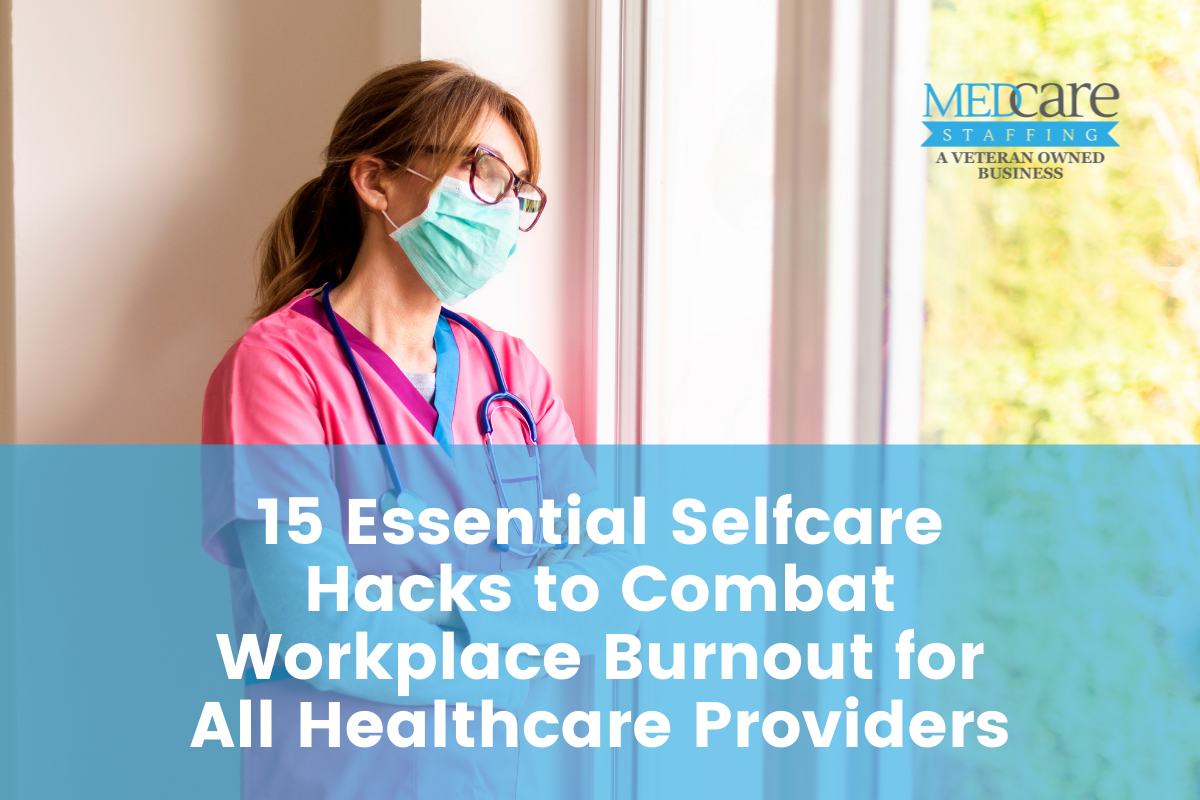
    15 Essential Selfcare Hacks to Combat Workplace Burnout for All Healthcare Providers

    Workplace burnout in healthcare has been going viral for quite a while. Covid-19 only exacerbated burnout symptoms suffered by many healthcare providers. Could self-care really be the answer to keep burn out symptoms at bay?

    What is burnout?

    Emotional, mental, and physical exhaustion caused by high amounts of long-term stress is what burnout is all about. American psychologist Herbert Fruedenberger started using the term ‘burnout’ in the 1970’s when he was describing the severe stress and high ideals he noticed being exhibited by nurses and doctors. Fruedenberger further concluded that many healthcare professionals, who sacrifice themselves to care for others, were exhausted, listless, and unable to cope.

    Highest risk for burnout

    According to various studies, 35% to 54% of healthcare providers suffer from burnout. Approximately 50% of American Physicians  alone suffer from burnout. Due to the increased stress levels and emotional strain, healthcare professionals are in the highest risk group to struggle with workplace burnout.

    Burnout and the brain

    Believe it or not burnout can change the brains anatomy. Chronic psychosocial stress from burn out can damage a person’s personal and social functioning and overwhelm cognitive functioning as well as the neuroendocrine system.

    A study found that people who suffered from workplace burnout had a large amygdala along with brain areas linked to emotional distress. The more stress a person reported in their work life, the weaker the connectivity between brain regions appeared on their MRI’s. Further studies done on occupational stress was linked to reductions in gray matter in the hippocampus as well as cortical thinning which effects memory, attention and emotions.

    Signs and symptoms of workplace burnout

    Burnout is a medical disorder and has its own ICD 10 code ICD-10 (Z730.0-Burn-out state of vital exhaustion). It is imperative that healthcare providers recognize the signs and symptoms of burnout before potentially life-threatening mistakes can occur. Signs and symptoms of burn out  include:

    • Feeling sinical
    • Having resentments towards your workplace and patients
    • Feeling helpless
    • Low energy levels
    • Reduced productivity
    • Feeling tired and drained
    • Frequent illnesses like cold or flue
    • Unclear job expectations
    • Loss of motivation or moral
    • Procrastination
    • Self-isolation
    • Change in appetite
    • Inability to sleep
    • Poor eating habits
    • Self-medicating with alcohol or other substances
    • Lack of social support
    • Work life imbalance
    • High blood pressure

    15 Selfcare hacks to combat burnout

    1. Know your breaking point

                To avoid getting to the “burnout” breaking point, it’s best to stop and do a self-    evaluation of how you are feeling. Do you keep getting triggered in a negative way by            your spouse, children and or dog? Are you having trouble focusing and concentrating?            It’s probably a             sign to take a day off.

    • Re-evaluate your goals

                Is your work bringing you passion and fulfillment? Do you dread waking up in the             morning to go to work? It’s best to write a list of ‘life goals’ and perhaps challenge      yourself by taking a creative course like stand-up comedy or improvisation. Believe it or             not, stand-up comedy and improvisation classes can help make your work life fun and            entertaining.

    • Take a vacation

                You do not have to take a lengthy vacation trip somewhere far far away. You can always plan a staycation where you live and focus on self-care activities full of exercise, mediation, and massages with a focus on relaxation.

    • Change your environment

    Your personal environment which includes work colleagues, friends, family, personal habits and where you live can all impact your daily life. Sometimes you must move out of a negative space and move into a more positive one. Maybe you have to get rid of negative co-workers and colleagues who bring you down.

    • Find the “Magic” in your daily life

                Finding the ‘magic’ in your everyday life can help to alleviate burnout and give you a        more positive outlook on life. Take pleasure in watching sunsets and sunrises. Talk to a             new person every day. Take a minute and smell the flowers before you start your day.

    • Take a nap

                Studies show that a short nap in the afternoon enhances mood, improves job       performance, makes you alert and eases stress.

    • Exercise

                Exercise helps to increase your endorphins which puts you in a better mood. Taking a      brisk walk on your lunch break can help you finish off your day on a happier note.

    • Follow your passion

                What do you love to do? Have you explored areas that add a spark to your daily life?       You can develop a skill in a particular area and use it to contribute to something beyond   yourself to make your life much more fulfilling.

    • Find a creative outlet

                Dancing, doodling, and coloring are all great creative outlets. A creative outlet helps you             to express your feelings and ideas in a positive way.

    1. Practice mindfulness

                Developing a mindfulness practice helps you to be aware of your thoughts and feelings   without interpretation or judgment. Mindfulness brings greater relaxation to the body      and mind.

    1. Meditate daily

                Daily meditation helps to decrease stress, have better focus, as well as decreasing           negative emotions.

    1. Organize your space

                Letting go of things that no longer serve a purpose in your life can create a massive shift.             Placing things in easy to find spaces helps to decrease stress.

    1. Practice positive self-talk

                Positive self-talk makes you feel good about yourself. Waking up in the morning and        greeting yourself in the mirror can have a tremendous positive effect on the rest of your   day. Creating an optimistic voice in your head encourages you to look at the bright side           of things picking yourself up when you fall.

    1. Start a gratitude journal

                Giving thanks and counting blessings helps you get better sleep, lowers stress, and           improves relationships. Starting a gratitude journal and outlining 3 things in your life you    are grateful for everyday can also help you decrease daily workplace burnout and give          you a more positive outlook in life.

    1. Buy yourself some flowers.

                Flowers brighten up any space. Don’t wait for someone to buy you flowers start a            weekly flower budget. This will not only brighten up your space but will also brighten up your mood and put a smile on your face.

    Dr. Richard Gunderman, professor of Radiology at Indiana University, explains that “the incremental onset of burnout is due to the accumulation of hundreds of tiny disappointments.” Burnout suffered by healthcare providers can have negative effects on patient care.

    MedCare Staffing places physicians, advanced practitioners, pharmacists and dentists in locum tenens positions and permanent jobs.

    If your current work situation causing you burnout? Stop those hundreds of tiny disappointments today and change your work environment by calling MedCare Staffing  (888)474-3380 and book your next Locum Tenen assignment by clicking here.

  • Summer is here… Time to plan your #Workation

    Summer is here… Time to plan your #Workation

    “Should I sell my home, all my personal belongings, pay off all my personal debt, buy an RV (recreational vehicle) and travel across the United States working as a Locum Tenens provider?”

    On a recent Facebook rant, an unhappy healthcare provider asked the above question. She also stated that her husband was feeling unfulfilled in his career.

    Most of the feedback she received shouted “Go for it!” and “You only live once!”

    Is work and travel throughout the United States a possibility or is it merely just a dream?

    Selling your home, all your personal belongings, traveling throughout the United States and maybe even the world, for the average human being, can seem like a dream only alive on Netflix.

    In the blockbuster movie “The Secret Life of Walter Mitty,” the protagonist ‘Walter Mitty,’ played by actor Ben Stiller, spends most of his mundane life daydreaming of extraordinary adventures. One day, his daydreams become a reality when he is asked to travel across the globe on a special work assignment that changes his life forever.

    True. You’ve got family. You’ve got friends. You’ve got responsibilities holding you back.

    Unfortunately, all these ‘things’ kept George Baily tied to his little hometown of ‘Bedford Falls,’ in the popular Christmas movie “It’s A Wonderful Life.” Throughout the beginning of the film, every time George packs his bags and is ready to embark on a great travel adventure, some type of life drama tends to get in the way of his ‘Wanderlust.’ Eventually, George succumbs to what society wants him to do and never travels outside of ‘Bedford Falls.’

    Don’t be a George Baily. Get your ‘Wanderlust’ on and go on a ‘Workation!’

    Are you tired of your regular healthcare gig? Need a change of scenery? Need some spice in your life and a new adventure? It’s time for you to take a #Workation.

    Workation: work and do the touristy thing on weekends or after work.

    Life is short. Why not live it on vacation? Planning a vacation while working a fulltime healthcare job can be challenging these days. Locum tenens makes planning a #Workation possible.

    Is a ‘Workation’ aka Locum Tenens gig right for you?

    The word “locum” comes from the Latin term meaning ‘place holder.’ A provider working as locum tenens, is a person who temporarily fulfills the obligations of another. In healthcare, a locum’s provider is usually employed at a hospital, private practice clinic, or community healthcare facility that may be short staffed or need temporary coverage when a provider is on leave.

    Locums providers are employed by private agencies. Working as a locums offers many opportunities to experience working in a variety of environment’s and specialties which may include: for profit agencies, academic health centers, state agencies, federal sites such as Indian Health Service, individual hospitals, and or international staffing companies.

    Flexibility is a key advantage to working as a locum tenens healthcare provider. This ‘gig’ can help to fulfill your career and economic goals. Locum tenens offers short term assignments that can turn into a long-term assignment, possibly ending in a permanent assignment.

    Top 3 ‘Workation’ destinations trending at MedCare Staffing this summer

    1. Montana… The ‘Treasure State’

    Majestic Montana also known as the “Treasure State,” due to its abundance in natural minerals such as gold, silver, copper, lead, zinc, coal and oil. The word ‘Montana’ means ‘mountainous,’ and captures the true essence of the ‘big sky’ state.

    Montana is home to seven State Forests and fifty-three State Parks. Its wide-open spaces include Glacier National Park, featuring snowcapped peaks, lakes and hiking alpine style. Montana has 2 main openings to Yellowstone National Park diving deep into the natural geyser country.

    Montana is perfect for the outdoorsy adventurer. MedCare staffing has locum opportunities available with Indian Health Services at Blackfeet Reservation and Crow Reservation for nurses, nurse practitioners and physicians.

    • Desert + Mountains + Beaches = California

    California. It’s one of the most popular destinations in north America. The Goldengate bridge, Disneyland, and Hollywood are huge tourist attractions. However, California has a little bit of something for everyone.

    Beautiful beaches, mountains and deserts are what make California a hot travel destination which never ceases to deliver. Music festivals in Coachella, Wine tasting in Sonoma, and surfing in Malibu are seasonal extras for the eclectic “Workationer.” Are your bags packed yet? Checkout MedCare staffing’s California locum assignments here.

    • Georgia, the Peach State

    Known as the largest state east of the Mississippi, Georgia is famous for more than just growing the sweetest ‘peaches.’ Georgia is home to the largest State Park in the nation, 350 bird species, Lookout Mountain, and the Okenfenokee Swamp.

    Georgia is also home to the world’s largest aquarium, Botanic gardens and the beaches on Jekyll Island as well as historic sites and antebellum homes. You can also visit the romantic Savannah and stroll down the Historic District while sipping on a sweet tea.

    If you’re a ‘foodie” Georgia has got some good eats. According to Lisa Love, Interim Deputy Commissioner at Georgia Tourism, she states that “One of the best ways to immerse yourself and truly experience Georgia is through our food.” She further goes on to say that “the history and culture of Georgia is woven into the many flavors, ingredients, dishes as well as traditions that create a dining experience that’s unforgettable.” For more information on Locum Tenem opportunities in Georgia through MedCare staffing click here.

    Are you ready to embark on your ‘workation’ locum tenens adventure? Call a recruiter at MedCare staffing today and pack your bags. Click here to learn more.

    #bestjobever

     It’s literally paid tourism. You can work in amazing places that offer historical and local attractions that will add to your work life balance.

    Flexibility is key

  • The Year of The Nurse Continues In 2021: A Vision for The Future of Healthcare

    The Year of The Nurse Continues In 2021: A Vision for The Future of Healthcare

    The year 2020 was officially inaugurated “The Year of The Nurse.” The global COVID-19 pandemic showcased the nursing profession as a vital lifeline to safe patient care. And in 2021, the year of the nurse gets an extension!

    The international theme for the 2021 “Year of The Nurse” is “A Voice to Lead-A Vision for the Future of Healthcare. “

    Strength in numbers

    Nursing is the largest healthcare profession in the United States. There are approximately 4 million nurses total. The average age of nurses is 47.9 years old. However, 77.3 percent of nurses are Caucasian and 9.6% are male.

    According to the National State Board Of Nursing Statistics (2018), you can find most nurses working in the hospital setting 59.9 percent, 15.6 percent in ambulatory settings, 16.2 percent work in ‘other’ settings, and 16.6 percent have no direct patient contact.

    Looking into the future of nursing

    There’s no doubt in any nurses mind that healthcare in the United States needs an overhaul. The COVID-19 pandemic caused an already inflamed system to burst like a huge abscess. Frontline nurses working at the bedside suffered personal protective equipment shortages (PPE), burnout, and some even lost their lives.

    It’s up to nurses to challenge hospital administrators and politicians regarding their healthcare policies and hospital standards in order to create a better future for safe and efficient patient care. Americans deserve a healthcare system that promises a better tomorrow that does not repeat the catastrophic pandemic crisis of 2020 and acknowledges the value of nurses.

    The National Academy of Medicine Committee on the Future of Nursing 2020-2030 explores the roles of nurses, responsibilities and significant education changes to meet the demand for care created by healthcare reform which seeks to improve America’s complex healthcare system.

    Trends in nursing on the horizon

    Bachelors-in-Science to practice nursing (BSN)

    New York in 2018 passed legislation that all nurses are required to earn a BSN with in 10 years of becoming licensed. Many states are planning to follow this trend.

    Online education programs

    The popularity of online nursing degree programs sprouted with COVID-19. Online nursing programs allow nurses to obtain higher degrees in nursing education while continuing to work as a nurse. An increase of online nurse practitioner programs, post masters and doctoral programs are predicted to flourish in 2021.

    Shortages in Physicians

    A physician shortage is predicted to continue. In 2018, the American Academy of Nurse Practitioners (AANP), reported that there were 248,000 licensed to practice in the United States. More and more hospitals are closing in rural areas. Family Nurse Practitioners are useful in rural areas where there is a growing population and lack of physicians.

    Full practice authority for Nurse Practitioners

    Both the national academy of medicine and the national council for state boards of nursing are urging states to allow nurse practitioners the authority to practice independently. Currently, 26 states allow nurse practitioners full practice authority.

    Nurses leaving the profession

    Several nurses are struggling with burnout which are causing them to leave the healthcare profession. Hospitals across the United States are suffering nursing shortages due to the COVID-19 pandemic. Many nurses are blaming lack of support from hospital management and administrators as well as a lack of focus on what nurses need in order to provide safe and efficient patient care.

    Nurses creating innovative paths in nursing through Locum Tenens

    Most hospitals lost about 30 percent of their nursing staff to travel nurse jobs due to the COVID-19 pandemic. As COVID-19 cases surged, so did travel nurse jobs with over 31, 000 openings. Many travel nurse agencies were offering nurses crisis pay of almost $10,000 per week. Staffing demands for travel nurses increased over 44 percent compared to the previous year.

    Locum Tenens means ‘place holder’ in Latin. One fills an office for a certain amount of time. Locum tenen assignments as well as travel nursing assignments have the potential of turning into full time positions. Locums positions are great for nurses who want to travel or stay local and experience a variety of different neighborhoods and diverse socioeconomic patient populations in order to broaden their scope of practice.

    There’s no doubt that travel nursing and locum tenems work offer nurses a better work life balance. Nurses, Advanced Nurse Practitioners, and Certified Nurse Anesthetists can plan their schedules and blocks of time off for higher education, travel, family planning and enjoy their life with ease.

    Medcare staffing offers nurses and advanced nurse practitioners contract and temporary assignements with full coverage of medical malpractice insurance. Click here to learn more and speak with a recruiter today.

  • Correctional Healthcare: A profession full of opportunities

    Correctional Healthcare: A profession full of opportunities

    Approximately 1.8 million Americans are incarcerated in state and federal prisons. Based on the communal nature of the prison system, specific medical needs are created. Today, there is an increased demand for physicians, nurse practitioners and nurses specialized in correctional healthcare.

    History of correctional healthcare

    Correctional healthcare did not exist until 1770 and was invented in England by a wealthy philanthropic healthcare former by the name of John Howard and physician John Fothergill. Louise Rene-Villerme a physician and pioneering hygienist published a study titled Des Prisons in 1820, further overhauling the public health concerns in prisons.

    According to the CDC the most common healthcare problems reported by prison inmates include:

    Infectious disease

    • Hepatitis
    • HIV/ Aids
    • MRSA
    • Sexually Transmitted Diseases
    • Tuberculosis

    Chronic Diseases

    • Arthritis
    • Asthma
    • Cancer
    • Heart Disease

    Learning disabilities and mental health

    The most common impaired functioning that jail inmates report is a learning impairment such as dyslexia or attention deficit disorder. Many inmates also report having been enrolled in special education classes during their youth. Approximately 8 percent of inmates state they suffered from mental health condition that kept them from fully participating in school, work, or other activities.

    Pregnancy in incarcerated women

    Approximately 3 to 5 percent of incarcerated women are reported to be pregnant when they go into a correctional system. Pregnancies of incarcerated women are usually high risk due to poor nutrition, limited accesses to prenatal care, domestic violence, mental illness, drug and alcohol addiction.

    Transgender healthcare

    During incarceration, transgender people may face a multitude of problems that may endanger their health and wellbeing. Correctional healthcare professionals must pay special attention to evaluation, screening, referral, and management of mental healthcare needs. Particular attention must be given to hormonal treatments for gender dysphoria and should follow accepted guidelines developed by professionals with specialized in transgender health.

    Special attention must be paid to transgender youth who enter into the corrections system. Mental health professionals experienced in working with transgender adolescents  must review the youths current clinical stability, mental health functioning , and possible need for added mental health therapy and intervention.


    Overall decreased life expectancy

    For every year a person spends in the correctional system, 2 years is taken off of their lives.  With 1.8 million people locked up, mass incarceration has lowered the life expectancy of a significant portion of the human population in the United States.

    Healthcare staff within the correctional system:

    Physicians: a physicians role in corrections is primary care that can reach highly intensive levels. Physicians medical practice roles include internal medicine, preventative care, urgent care, emergency care, routine patient care, basic orthopedics, dermatology, minor office procedures, chronic care and end of life care. Some patient may need to be transported off site for tests, medical procedures and consultations.

    According to the American College of Correctional Physicians, a physician working in corrections must be aware of and balance interests of; good solid medical practice, medical supervision, implementation of process, medical board rules, the safety and security of the facility, the individuals in the facility, and the community. A few examples of medical-custody coordination are:

    • Timely access to medical
    • Timely treatments and
    • Medical training and supervision

    Nurse Practitioners: can provide care to adolescent patients to geriatric patients within the correctional healthcare system. Nurse practitioners practice within their scope and can perform physical exams, health screenings, medication management, sick calls and pregnancy and post-partum care. Correctional NP’s are positive advocates for patients and provide education to correctional administrators, judges, caseworkers and correctional staff.

    Nurses: provide direct patient care to inmates in jails and prisons. Nurses treat patients in the correctional system for a variety of ailments including emergency medical conditions, acute illness, as well as chronic medical conditions.

    Correctional healthcare staff may also be involved in hunger strikes, isolation, sexual abuse, transgender, elderly release pleas, compassionate release pleas and long term involuntary psychotropic medications. All incarcerated people within the correctional system must be treated with fairness and receive comprehensive healthcare. It is the responsibility of correctional healthcare team to advocate for the healthcare needs of these individuals.

    Curious about a career in Corrections Health? Try out a Locum Tenens assignment with Medcare Staffing

    Medcare staffing has a variety of locum tenen assignments in corrections for physicians, nurse practitioners and nurses in a variety of different states. Click here to find out more information and speak to a recruiter today.

  • Numerous Dentists Are Facing Aggressive Patients and Workplace Violence, Checkout These 5 Tips On How To Protect Yourself

    Numerous Dentists Are Facing Aggressive Patients and Workplace Violence, Checkout These 5 Tips On How To Protect Yourself

    Pain. That’s usually the first thought that pops into your mind when you think about going to see a Dentist. The second thing you might be thinking about is the shrill noise a drill makes right before it enters your mouth. And of course, the thought of needles comes next!

    Dentists get a bad rap based on what typically happens during a normal dental checkup.

    Unfortunately, a recent study conducted by New York University discovered that more than half of all the dentists surveyed stated they had experienced physical and or verbal abuse in their careers from patients. The study from the NYU college of Dentistry concluded that 55 percent of dentists were victims of verbal aggression from their patients in the last year. One in four of those dentists surveyed, experienced physical aggression from an irate patient.

    “Workplace violence toward healthcare professionals is both widespread and widely overlooked,” said Kimberly Rhoades, a research scientist in the Family Translational Research Group at NYU College of Dentistry and the study’s lead author. “The purpose of this study was to provide an initial estimate of rates of patient aggression in dental practices in the United States.”

    Rhoades and her colleagues surveyed 98 dentists practicing in the New York City metropolitan area; the dentists had been working an average of 17 years. Participants completed a confidential online survey assessing whether they had experienced any of 21 specific types of aggressive behaviors from their patients, including types of physical (e.g. being pushed or kicked), verbal (e.g. being insulted or sworn at), and reputational (e.g. threats of lawsuits or posting nasty comments on social media) aggression.

    The study further discovered that the increased rates of aggression found in the study results did not differ by sex, race, ethnicity, specialty, age, years in practice or average number of patients seen and treated on a daily basis. Although, researchers did note that there was less aggression towards a trained dentist than towards dental students. Experienced professional received significantly less verbal abuse 55percent compared to 86 percent.

    Violence in the healthcare workplace is a serious problem.

    As a healthcare provider, you would never think your patient would want to harm you, but it happens. Workplace violence in healthcare is a growing problem. In 2018, workplace violence due to intentional injuries by other persons accounted for 2 percent of the 900,380 total nonfatal occupational injuries or illnesses in which required a leave of absence from their place of employment. The United States Bureau of Labor Statistics states that 73 percent of all nonfatal workplace injuries due to violence were experienced by healthcare workers in 2018.

    Homicide is the most extreme form of healthcare workplace violence. It’s the third leading cause of an. Occupational injury that is fatal. In 2000, there were 11 percent of the total 5,915 fatal work injuries in the United States. The cause of these homicides is attributed to the environmental conditions experienced in these locations. 

    The United States Occupational and Safety Administration (OSHA) has identified the following risk factors that increase a healthcare workers risk for assault as identified by the National Institute for Occupational Safety and Health (NIOSH) which include:

    • Regular contact with the public
    • Money exchange
    • Delivery of goods and services
    • Mobile workplace such as an ambulance
    • Working alone or in small numbers
    • Working late night
    • Working with unstable or volatile patients
    • Working in areas with a high crime rate
    • Working in a community setting
    • Guarding valuable possessions and or property


    It’s true, people are afraid to go see a dentist

    A recent survey found that 62% of adults stated that they were too scared to even walk into a dentist’s office. The survey also stated that millennials were more likely to come up with excuses to avoid going to see a dentist for a regular checkup than people over the age of 55.

    Anxiety experienced by patients

    Understanding that aggression can be experienced by dentists on a normal dental visit with a patient is the first step in developing interventions to prevent aggressive behavior in a dental practice.

    5 tips to keep Dentists and Healthcare workers safe when dealing with anxious patients

    1. Identify dental phobic patients: having the patient express to the dentist that they have anxiety is beneficial. The dentist should keep in mind both subjective and objective evaluations in order to work with the patient to establish a more relaxed mood. Having a calm and uninterrupted interview before any dental procedures could prove to be beneficial to both dentists and patient.
    • Anxiety questionnaires: Based on these questionnaires, patients can be categorized as mildly anxious, moderately anxious, and extremely anxious or dental-phobic. This can help both the dentists and patient identify how to combat feelings of anxiety in order to have a less stressful experience as well as a positive outcome.
    • Dental office environment: A patient can experience anxiety by just walking into a denial office. Receptionists, dental nurses, and dental hygienists are crucial personnel in creating an atmosphere in the dental office. Kind and courteous staff can decrease anxiety and provide a nurturing environment. Introducing pleasant ambient odors in the dental environment can reduce anxiety. Smells trigger emotions and can negatively condition a patient toward going to have a dental procedure done. Inhalation of pleasant scents like essential oils improves mood.

    Shapiro et al adapted a “Snoezelen” dental environment for pediatric patients comprised of dimmed lighting, soothing music, and a special Velcro butterfly vest that hugs the child, providing a calming, deep-pressure sensation. Typical children and those with developmental disabilities have been shown to benefit by this SDE, as behavioral and psychophysiological measures of relaxation improved significantly in the SDE compared with a conventional dental environment.

    • Behavioral contracts: Contractual agreements signed by the dentists and patient can set specific guidelines regarding how the patient will be treated or continue to receive treatment may help set up standards to protect both patient and dentist. Contracts should be specific in order to allow for action taken by the practice and staff to be sufficiently supported.
    • Refusal or discontinuation of treatment: It’s ok to “fire” your patient and refuse to see them due to noncompliant, poor and aggressive behavior. If you have tried all of the above tips in order to ensure a safe environment for you, and your staff, and still your patient decides to behave badly, then it’s time to let them go.
  • Who’s Putting You To Sleep? The Value Of Certified Nurse Anesthetists (CRNAs) In Clinical Practice.

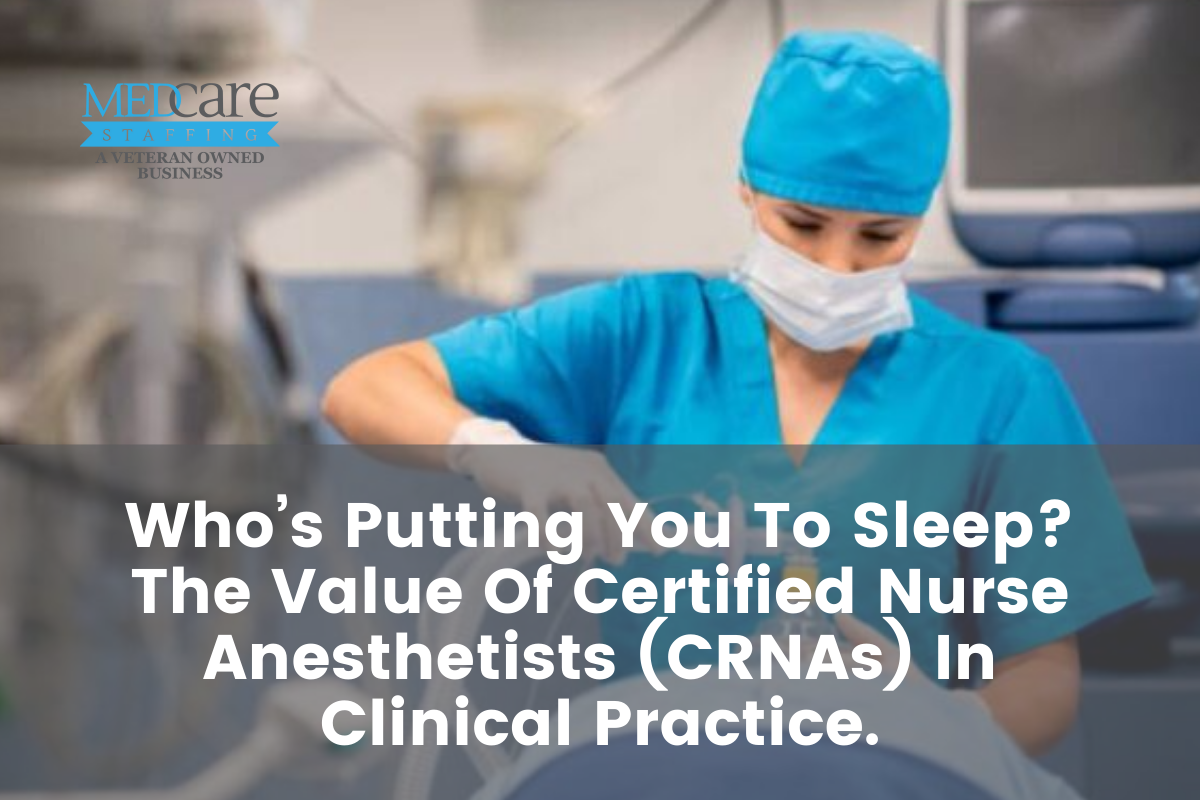
    Who’s Putting You To Sleep? The Value Of Certified Nurse Anesthetists (CRNAs) In Clinical Practice.

    Certified Registered Nurse Anesthetists (CRNAs) can be found in operating rooms, intensive care units (ICU’s), Obstetric centers and or ambulatory surgery centers. They are advanced practice nurses who administer anesthesia and various other medications safely to over 50 million patients a year. Many CRNA’s practice autonomously or in teams depending on state regulations.

    History of CRNA’s

    For over 150 years Certified Registered Nurse Anesthetists (CRNA’s) have been putting people to sleep in the United States. The Anesthesia care in the U.S. was mainly provided by trained nurses supervised by surgeons until anesthesiology was developed as a medical specialty.

     Nurses first gave anesthesia in the Civil War while they were caring for wounded soldiers. Surgeons sought out nurses to give anesthesia due to the high morbidity and mortality rates they were experiencing during surgery. In 1877, Sister Mary Bernard became the first nurse to specialize in anesthesia at St. Vincent’s Hospital in Erie Pennsylvania.

    The first CRNA known as “the mother of anesthesia” was Alice Magaw in 1893. The title was given to her by Dr. Charles Mayo due to Mary’s magnificent mastery of “open drop ether.” She founded the first CRNA program 1909 by  at St Vincent’s hospital in Portland Oregon. Originally, it was a course consisting of 6 months that focused on relevant anatomy, physiology and anesthetics.

    Since World War I, nurses were the principal providers of anesthesia during surgical procedures. CRNAs have been wounded in military combat, have been prisoners of war and died for their country. There are even 2 names of CRNA’s engraved on the Vietnam War Memorial 1st Lts. Kenneth R. Shoemaker, Jr., and Jerome Olmstead. Several CRNA’s also served as chiefs in the Nurse Army Corp during the Vietnam War.

     Agatha Hodgins founded the National Association of Nurse Anesthetists on 1931 in Cleveland Ohio. The first certification exam for CRNA’s was administered in 1945.

    Safety stats

    CRNAS were found to be the most cost effective sole anesthesia provider in the model of anesthesia delivery with no measurable difference in the quality of care per a study in the Journal of Nursing Economics. There are many studies that have also found no difference in care between nurse anesthetists and physician anesthesiologists according to a literature review by the Cochrane Collaboration. A recent study in Medical Care (June 2016) noted there was no measurable impact in anesthesia complications exhibited by CRNAs scope of practice or practice restrictions.

    Reimbursement rights

    It wasn’t until 1986 that CRNAs became the first nursing specialty granted direct reimbursement rights from Medicare. U.S. Congress passed a legislation in 2020 that prohibits health plans from discrimination against qualified licensed healthcare professionals which include CRNAs and other non-physician healthcare providers.

    Supervision Opt-Out

    The federal physician supervision rule for CRNAs was changed in 2001 by CMS. State governors are allowed to opt-out of the facility reimbursement requirement used by surgery centers and ambulatory surgery centers by meeting the following criteria

    1. Consult the state boards of medicine and nursing about issues related to access to and quality of anesthesia services in the states.
    2. Determine that opting out is consistent with state law
    3. Determine that opting out ids in the best interest of the state’s citizens.

    Which states have opted-out?

    Approximately 19 states including Guam have opted-out of the federal physician supervision  requirement. These states include Arizona, Oklahoma, Iowa, Nebraska, Idaho, Minnesota, New Hampshire, New Mexico, Kansas, North Dakota, Washington, Alaska, Oregon, Montana, South Dakota, Wisconsin, California, Colorado, and Kentucky. However, due to the COVID-19 crisis in 2020, CMS suspended the supervision of CRNA’s in order to further increase the U.S. healthcare delivery system. A January 2021 CMS reports from the COVID-19 crisis stated that CRNAs were among the top 20 specialties that served the most beneficiaries in non-telehealth care between March 2020 and June 2020.

    What does it take to be a CRNA?

    Today all 50 states in the U.S. utilize CRNAs. CRNA programs take into account the complex matter of providing anesthesia care and the curriculum that is necessary for nurse anesthetists. In order to practice, CRNAs must hold a master’s degree in nursing, but more employers are preferring those who hold a doctorate of nursing practice (DNP) degree with national certification. On average, registered nurses entering nurse anesthesia programs have been in practice for approximately 2.9 years.

    On average, graduates of nurse anesthesia programs complete 9369 hours of clinical experience which included 733 hours during the baccalaureate nursing program, 6032 hours as a critical care registered nurse, and 2604 hours during their nurse anesthesia program. Various CRNAs pursue a fellowship program specializing in pain management

    Average CRNA salary

    Between 2019 and 2029 the Bureau of Labor Statistics (BLS) projects a 45 percent job growth for CRNA’s. CRNAs are the highest nursing profession with an average mean salary of $189, 190.00 per year.

    Employ a CRNA today

    CRNAs can be considered one of the most trusted professions per Gallup poll results. Places like rural America benefit from CRNAs due to their cost savings and reimbursements as compared to employing an anesthesiologist. Many locum Tenens employ CRNAs to work in various areas around the U.S. and offer the benefits of work travel opportunities.

    If you are a CRNA looking for Locum Tenens opportunities or a healthcare facility looking to employ a CRNA please contact a recruiter at Medcare Staffing.

  • Tax Season, 1099 Status and Starting An LLC, What All Healthcare Providers Need To Know

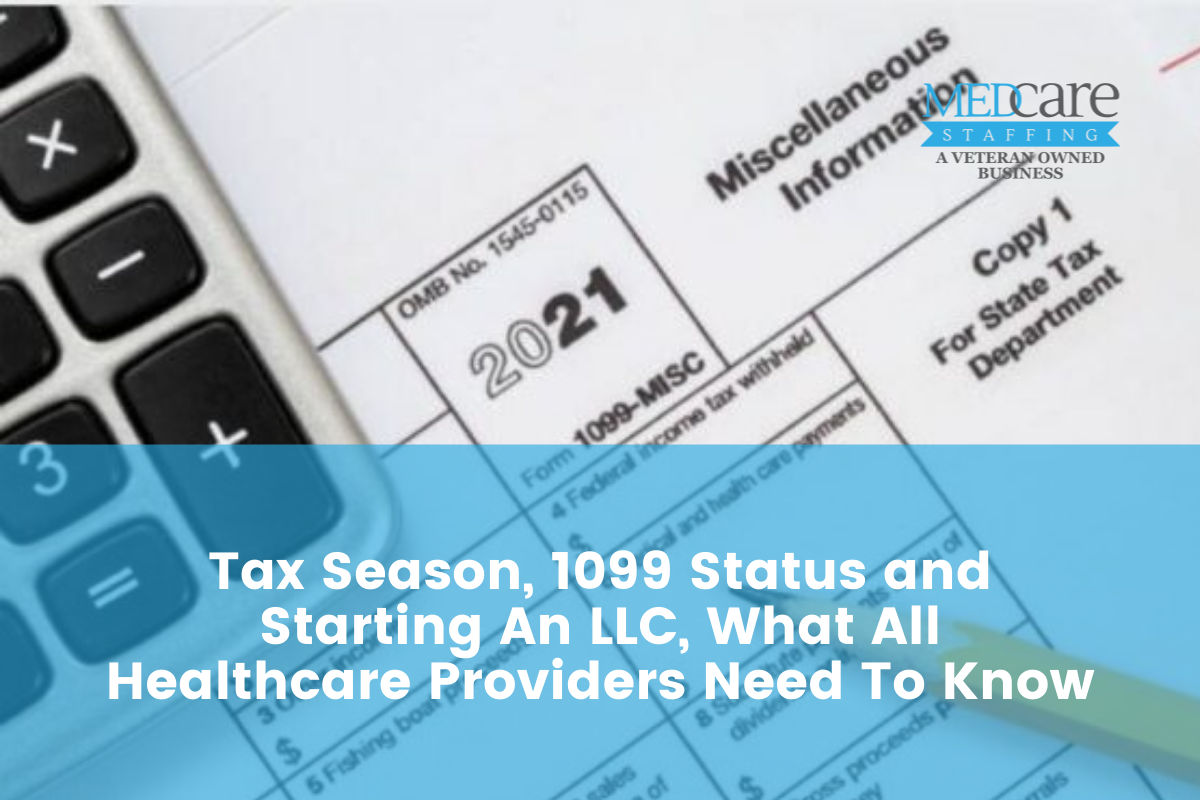
    Tax Season, 1099 Status and Starting An LLC, What All Healthcare Providers Need To Know

    The hardest thing in the world to understand is the income tax.

    -Albert Einstein

    Tax season is here. It can be an overwhelming time for many healthcare providers. Especially if you are a private contracted employee.

    Taxes are the biggest expense of your life

    At one point in time, almost every healthcare provider in the United States has worked under a W2 status. Your employer took care of all your tax deductions and those included: state income tax, federal income tax, and social security tax. On pay day, you’d see a huge portion of your wages going to the taxman and you were left with some scraps.

    Healthcare providers employed by a locum tenens agency are usually characterized as ‘independent contractors’ and will file their taxes under a 1099 status. Basically, no taxes are deducted from your paycheck by your employer. But that doesn’t mean you get to hit your favorite shoe store or casino on pay day. You still gotta pay Uncle Sam!

    The Power of the 1099 status

    Lowering your tax bill as much as possible ‘legally’ is the name of the game when it comes to filing your taxes as a 1099 status. Once you categorize yourself as an independent contractor under a 1099 status, you are still responsible for paying taxes at the end of the year. If you don’t plan accordingly, your tax bill at the end of the year can be a total shocker.

    How can I lower what owe Uncle Sam every year?

    Pure and simple, register yourself as a Limited Liability Company (LLC) and have your checks made out to your LLC instead of to you directly. An LLC is a business structure whereby the business owners are not personally liable for the company’s debts or liabilities. LLC’s are hybrid entities that combine the characteristics of a corporation with those of a partnership or a sole proprietorship.

    LLC’s are incredibly popular. They provide the same liability as a corporation but are easier and much more cost efficient to run. Your LLC business is responsible for covering all expenses for running it.

     What can you deduct as an LLC?

    • Rental space or home office: a portion of your home mortgage can be deducted.
    • Charitable giving
    • Professional liability insurance
    • Tangible property: property purchased for the LLC’s use
    • Professional expenses: this includes professional licenses, engaging in professional development such as professional journals
    • Meals and entertainment: half of the cost of meals and entertainment related to prospective business with customers. Meals with employees are deducted in full.
    • Independent contractors: can be deducted in full.
    • Automobile expenses, gas and mileage
    • Travel for business
    • Interest: if you use a credit card for your business expenses and purchases, the interest acquired can be deducted.
    • Equipment
    • Taxes incurred in business operations
    • Advertising and promotion
    • Office supplies
    • Parking and meters
    • Postage
    • Education: this includes CE’s, CME’s and conferences.

    How to start an LLC

    There are several different ways to start an LLC. You can pay a third party like Legal zoom to do it for you. There are also various online companies that can offer you this service. It’s a simple process, you choose a name and pay a fee.

    You can also start an LLC on your own. Go to your home states secretary of state’s website, create and account and fill out the allotted forms. Articles or organization can be provided to you with in 24-48 hours

    The Pros of filing as a 1099 and starting your own LLC

    An article published on the website EliteNP states “ a self-directed IRA or a 401k paid for by your company can result in significant retirement savings. The maximum contribution to a self-directed 401k is $56,000 a year compared to $18,500 for the W2 employee. This lowers your

    taxable income.” 

    The Cons of starting an LLC

    Profits are subject to social security and Medicare taxes. In some cases, the owner of an LLC may pay an increased amount of taxed than owners of a corporation. Salaries and profits of an LLC are subject to self-employment taxes which are equal to 15.3 percent.

    Putting money aside for tax time

    Ideally, if you are a 1099 private contractor and starting an LLC, you will want to put money aside to that when tax day rolls around, you are adequately prepared. Approximately 30 to 40 percent of your income should be set aside.

    Side gigs will help

    Providing another service under your LLC will help you get the most benefits. For example, you can provide consulting services, be a freelance writer, or open up a travel business and see a few clients per month. You are more than just a private contractor; you are a legitimate business.

    Perhaps Benjamin Franklin said it best, “nothing is certain in this world except death and taxes.” Understanding what your tax benefits when working as a healthcare provider and categorized as private contractor who is filing your taxes under a 1099 status is key to success. The savings benefits of starting your own LLC with the addition of side businesses in the end will prove to be satisfactory.

  • Is Your ‘Normal’ Healthcare Gig Getting You Down? Try Giving Locum Tenens A Shot!

    Is Your ‘Normal’ Healthcare Gig Getting You Down? Try Giving Locum Tenens A Shot!

    These days the healthcare industry has left many healthcare professionals contemplating their careers. Locum tenens work offers healthcare providers tremendous career alternatives. Whether you are seeking to transition into early retirement, moonlighting to test the waters in a new organization, or just exploring new healthcare opportunities, Locum Tenen’s work can breathe fresh air into your healthcare practice.

    What Is Locum Tenens?

    Locum tenems in Latin means place holder. A locum tenen’s healthcare provider is a person who temporarily fulfills the space of another. Many organizations like hospitals, Federally Qualified Healthcare Centers (FQHC), Dental clinics, and Urgent Care Centers employ locum tenem’s healthcare professionals.

    Doctors, Dentists, Nurse Practitioners, Certified Nurse Anesthetists, Nurses and Physician assistants can all be employed by locum tenens agencies.

    Perks of Working Locum Tenems

    Locum Tenens companies offer healthcare professionals many benefits. Some of these include:

    • Travel: Who doesn’t love a work-vacay? The best part about working for a locums company for most healthcare professionals is the opportunity to travel. Locum tenens companies have assignments in various locations across the country. A change of scenery can work wonders for your career and perhaps help you breathe new life into your practice.
    • Better Flexibility: Healthcare professionals have more control over their workload assignments. They have the autonomy controlling their work schedules and tailoring it to their personal needs.
    • Trying out new workplaces: It’s kind of like dipping your toe in the pool to test the waters temperature without the full-time commitment. The organization can also see if your personality fits their culture.
    • Greater compensation: Healthcare professionals may have a greater earning potential working through a locum tenens agencies. Though agency rates and salary compensations may vary from state to state.
    • Less administrative responsibilities: Locums work is temporary and for many this means less administrative responsibilities like teaching, taking call time, and paperwork.

    . Locum tenens can be a great way to slowly ease into retirement for many healthcare providers without the fulltime work responsibilities.

    NALTO: National Association Of Locum Tenems Organization

    Although many locum tenem businesses are independtly owned and operated, NALTO, National Association Of Locum Tenems Organization was created in 2001 to enforce strong industry standards and practices for the locum tenens healthcare professionals. NALTO’s main goal is to set clear and effective parameters of behavior for all individuals affected by the industry, including both healthcare professionals and clients.

    Locum Tenens agencies, who are affilitated with NALTO will strive to protect the integrity of their relationships with phycians by completly disclosing information relevant to the healthcare provider, requesting permission before distributing a CV, and striving to maintain strong relationships with a large network of clients.

    Choosing A Locum Tenems Firm

    In today’s healthcare landscape, there are thousands of locum tenens companies to choose from. So, how do you pick the right company without getting overwhelmed? NALTO has these suggestions that can be helpfull when picking a locum tenens company that provides the right fit. These include:

    1. NALTO affiliation? Due to all members having to follow and ethical code, you can rest assured that these companies follow the highest standards of service.
    2. Malpractice insurance coverage? Does the company cover the healthcare professional and are they concerned if you carry your own coverage?
    3. Can the company pay their employees on a regular basis? Does the company have the financial resources to do so?
    4. How accessible is your recruitment representative? Are they available to answer your questions and help you through the locum tenes process?
    5. Will the locum tenems company be taking care of all your sign on details which include: licensure, credentialing, hospital privileges, proper travel and housing arrangements? 

    Best Practices

    NALTO enforces ‘best practices’ for all their affiliated Locum Tenen’s organizations which include:

    • Obtaining signed contracts and fee agreements before CV’s are submitted for considerations.
    • Healthcare workers permission must be requested before submission of CV
    • Seek to resolve disputes between companies with minimal involvement from healthcare workers.
    • Honor all contract agreements with clients and maintain communication
    • Represent all client agreements and opportunities accurately and completely.

    Furthermore NALTO offers standards of practice for both clients and healthcare providers to ensure the best possible business relationship. Clients and physicians should:

    • Agreements and contracts with locum tenem companies should be honored and other forms of communication from companies where no formal working agreement exists should be rejected.
    • Keep good records of all communication
    • Communicate to the locum tenems company any changes in intention and or search criteria
    • Respond promptly to communications from the locum tenens company
    • Report any violation or infraction of the NALTO code of ethics.

    COVID-19 has exasperated the healthcare workforce at many healthcare organizations. Locum tenens offers a fresh alternative for healthcare organizations to replenish their workforce. Healthcare professionals can also explore locum tenems work as a way to take break from their regular healthcare employment or as an alternative to extra income

  • Love, Can It Actually Save Your Life?

    Love, Can It Actually Save Your Life?

    “There is only one happiness in this world, to love and to be loved”

    -George Sand

    Love, it’s the thing that sells greeting cards and chocolates. It’s the stuff that ‘rom com’s are made of. But, is love really something stupid or can it actually save your life? Does being in love make you a healthier human?

    It All Starts In Adolescence

    Who doesn’t remember their first crush and or first love interest? The swirls of dopamine serotonin and oxytocin putting you in that first crush love high. Studies show that romantic relationships and experiences are important in development and social bonding.

     By middle adolescents, most boys and girls have been involved in one romantic relationship. Positive relationships experienced in adolescents with strong emotional bonding are vital in the development of romantic relationships. Although, there are studies that suggest there’s a greater chance for depressive issues in adolescents who are in romantic relationships.

    Blinded By Love And Science

     An abundance of scientific evidence exists to prove that social relationships have significant effects on the human body. Various studies  have found that people who have low levels of social interactions are more likely to die than those who have greater social interactions. The risk of death in these studies amongst men and women with the fewest social ties were more than twice as high than the risk for adults with more social ties. Morbidity and mortality rates among married people are lower than those who are unmarried. Unmarried people were found to be at greater risk of heart attacks, cancer, and surgical procedures.

    Heart Health and Love

    The saying is true, “happy wife, happy life.” A 2013 study conducted by the University of Michigan found that women who were in happy marriages had lower risks of heart disease. Studies have also shown that couples in happy relationships had lower blood pressure ratings.

    Relationships Influence On Healthy Behaviors

    When your spouse, family member or friend tells you to stop smoking or not to have that second piece of cake, they could be saving your life! Social ties influence health behaviors in people by influencing or controlling health habits. For example, a spouse may regulate or facilitate health behaviors that can improve health. In healthcare, it’s not uncommon to have a spouse or significant other influence a patient’s medication or diet regimen. Meanwhile, a study found that married couples had a 10-15 percent lower risk of dying prematurely.

    Partnerships and Mental Health

    Being cared for decreases anxiety. Having a supportive loving partner will of course make you feel good about yourself. A study conducted in 2017 noted that being in a relationship had a positive impact on your self-esteem.

    On average, married people have better mental and physical health than single people do. It’s true, a troubled marriage can also add stress to a person’s health which can cause problems. Distressed marital relationships can lead to depression. There are studies show that depression causes multiple issues in the body related to the endocrine system, nervous system, cardiac, immune and neurocognitive systems which can lead to premature death.

    Better Sleep

    We all need sleep better sleep. Partners slept better alongside a loving partner who is responsive to their needs. This was noted in a study conducted in Turkey with 700 participants.

    The Happiness Factor

    Harvard conducted a grant study over a 75 year period. The results found that overall good relationships keep us happier. So, if you are asking yourself whether or not you should put more effort into cultivating healthier relationships, the answer is yes if you want to live a longer and healthier life.

    What Healthcare Providers Should Keep In Mind

    Relationships are important factors to consider when healthcare providers are completing healthcare assessment on their patients. Asking a patient if they’re have personal relationships: spouses, romantic partners, and friendships could uncover data that is pivotal in diagnosis and treatment of a patient’s healthcare issue.  COVID-19 has caused much social isolation paired with increased depression and suicide. Heart health, blood pressure and mental health can all be affected both positively and negatively by relationships and marriage.